Whether you’re running a municipal public works department or managing a private hauling business, dispatch is the heartbeat of daily operations. When dispatch breaks down, everything feels it: missed pickups, repeat trips, route overlap, frustrated drivers, and a phone that won’t stop ringing.
Modern waste fleet dispatch tools replace whiteboards, spreadsheets, and paper route sheets with a system that keeps routes, drivers, and service information in sync, so work gets done the first time, with fewer surprises.
But not all “dispatch” software is built for waste. The best platforms understand waste-specific realities: recurring routes, service verification, cart issues, blocked access, contamination, bulky/on-call work orders, and the constant need to adjust without derailing the entire day.
Below is what modern dispatch should include, plus how Hauler Hero approaches dispatch in a way that’s practical for real operations.
What Dispatch Tools Do for Waste Teams
At a high level, a solid waste dispatch system should help you:
-
Plan and publish routes without reinventing the wheel every morning
-
Get drivers the right info (stops, notes, instructions, exceptions) on a digital format that ideally self updates if something changes.
-
Track progress in real time so you can answer customer calls with confidence
-
Handle service changes and exceptions without losing visibility
-
Report on what actually happened to improve reliability over time
Dispatch isn’t just “where the trucks go.” It’s the layer that turns your service promises into completed work, with proof.
Core Capabilities of Modern Waste Dispatch Tools
1) Route Planning and Dispatch That Matches Waste Reality
A lot of systems talk about “route optimization,” but for many haulers and cities, the daily requirement is simpler and more urgent:
-
Build routes that reflect your service areas and constraints
-
Schedule recurring routes
-
Make it easy to adjust quickly when the day changes
How Hauler Hero helps:
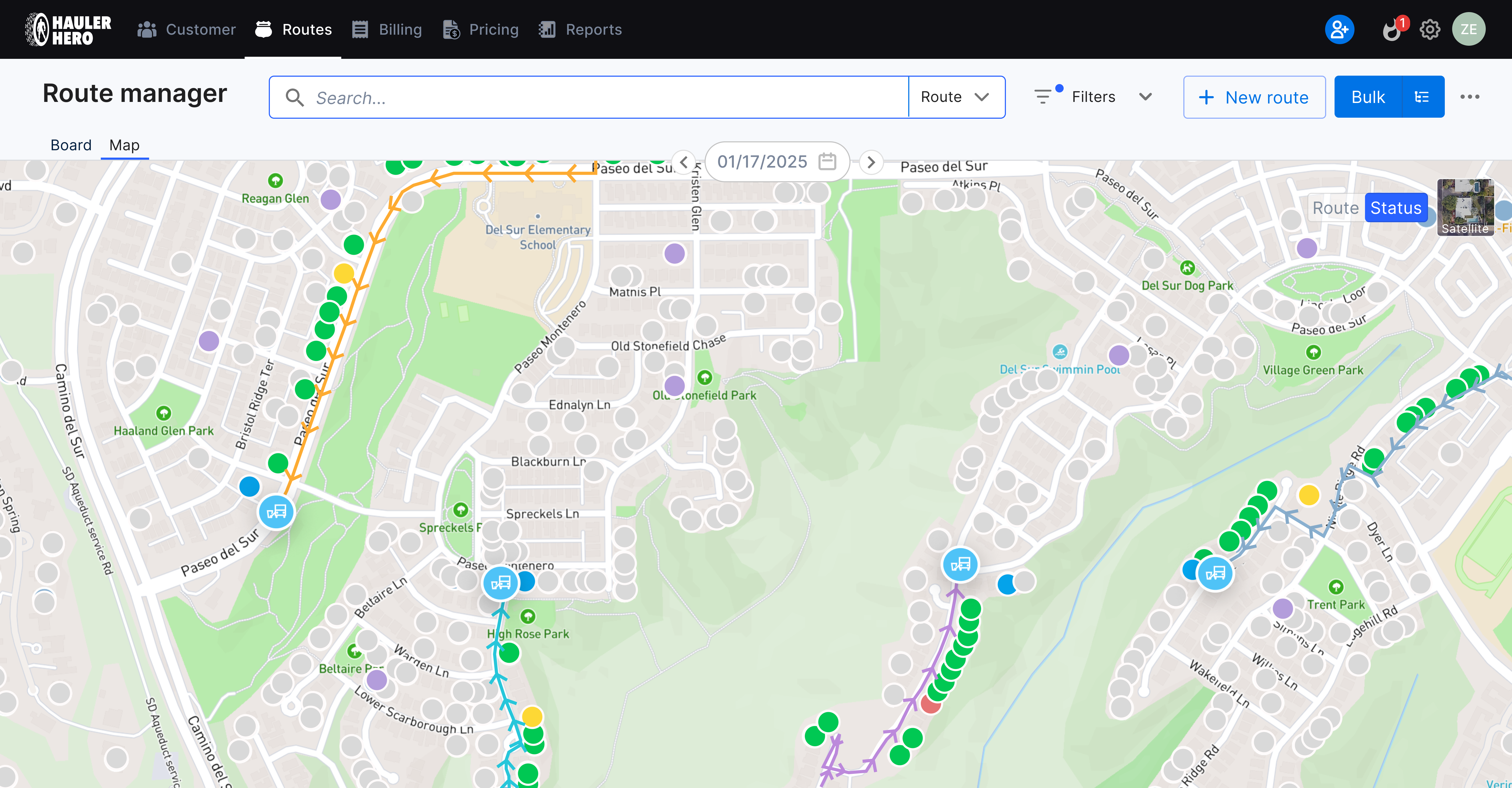
Hauler Hero supports route planning and route management built around recurring waste operations. Dispatchers can create routes, assign drivers and vehicles, and publish route manifests digitally, so drivers aren’t relying on paper lists or last-minute texts. For operations that run the same neighborhoods and service patterns each week, that “repeatable structure” is what prevents daily chaos.
2) Driver Manifests on Tablets (No Paper, No Re-Keying)
Paper route sheets create predictable problems: missed notes, lost updates, and no easy way to confirm what happened at a stop.
How Hauler Hero helps:
Drivers receive their work in a tablet-friendly workflow that keeps stops, instructions, and service expectations clear. When drivers complete work (or can’t), the status is recorded immediately so the office isn’t chasing down answers later.
.png?width=463&height=337&name=Mobile%20otro%20hotel%20(2).png)
This is where teams often feel the biggest difference day-one: dispatch stops being a manual relay team and becomes a real-time operational view.
3) Real-Time Visibility Into Route Progress
When a customer calls with “Did you get my street?” the wrong answer costs you time, credibility, and often a return trip.
How Hauler Hero helps:
Hauler Hero gives dispatch and supervisors visibility into route completion and service status updates as the day unfolds so you can quickly see what’s done, what’s pending, and where exceptions are piling up.
.png?width=1440&height=749&name=Group%201860%20(1).png)
That visibility supports practical daily decisions like:
-
sending a helper truck to finish a pocket of stops
-
moving an on-call job to a later window
-
identifying a recurring issue area before it becomes a complaint spike
4) Exception Handling and Proof of Service (Because Things Go Wrong)
Waste routes don’t fail because people don’t try, they fail because the field is unpredictable: blocked access, contamination, overflow, missing carts, locked gates, weather, construction, and customer “special requests” that didn’t make it to the driver.
How Hauler Hero helps:
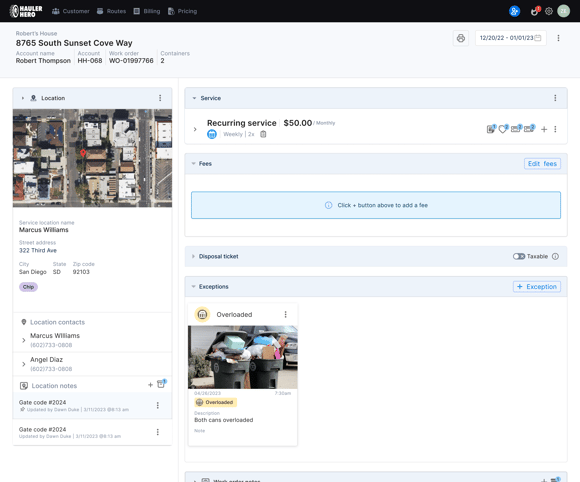
Hauler Hero is built to capture service outcomes and exceptions during route execution, creating a cleaner feedback loop between drivers and dispatch. This can include waste-specific documentation like notes and evidence tied to service events so you have a record of what happened and why.
For many organizations, this reduces:
5) Service Verification Options
Service verification is no longer a “nice to have”, especially for municipal programs, subscription-based services, cart billing, and any environment where disputes are frequent.
How Hauler Hero helps:
Hauler Hero supports RFID-enabled service verification and billing workflows, and can connect into existing onboard RFID setups (or work alongside third-party hardware providers) to match operational requirements. This helps organizations verify service at the point of pickup and keep records aligned with billing and customer reporting.
6) Reporting That Improves Operations
Dispatch software shouldn’t just store activity, it should help you run smarter next week than you did this week.
How Hauler Hero helps:
Hauler Hero provides operational reporting and visibility around route execution and service activity—helping teams identify patterns like:
-
frequent missed/blocked stops by area
-
high-exception routes that need redesign
-
repeat service requests that should become recurring
-
performance differences between routes, days, or seasons
The goal is simple: fewer surprises, more predictable service, better staffing decisions.
7) One Platform for Mixed Services (Residential, Commercial, Roll-Off, On-Call)
Many fleets run multiple service types and the complexity multiplies fast when each line of business lives in a separate tool.
How Hauler Hero helps:
Hauler Hero is designed for waste and hauling operations that may run residential routes, commercial accounts, roll-off work, and on-request services without forcing dispatchers to juggle disconnected systems. That “single operational picture” reduces overlap and improves accountability across teams.
What Dispatch Looks Like Day-to-Day With a Modern System
Morning: Routes are published digitally. Drivers open their tablets and see their assignments clearly, no paper handoffs, no retyping notes, no “where’s my list?”
Midday: Dispatch monitors route progress and exceptions in real time. When something changes—traffic, weather, an urgent on-call request—dispatch can react without losing track of what’s already completed.
Afternoon: Completed service data and exceptions are already captured. Supervisors and office teams aren’t chasing down answers, they’re acting on real information.
The result: fewer missed stops, fewer repeat trips, less dispatcher stress, and a better customer experience.
Why Private Haulers and Municipal Leaders Should Care
For Private Haulers
-
Reduce cost per stop by cutting repeat trips and cleaning up route execution
-
Increase capacity without immediately adding trucks or headcount
-
Improve customer retention with better service documentation and fewer missed pickups
-
Create operational consistency even when your team is growing fast
For Municipal Operations
-
Improve service reliability across zones, crews, and seasonal changes
-
Reduce resident complaints with clearer visibility and verification
-
Support transparency with better service records and reporting
-
Make budgeting and staffing decisions using operational reality, not guesswork
How to Evaluate a Solid Waste Dispatch System
If you’re comparing dispatch tools, use this checklist:
-
Waste-specific workflows: Can it handle recurring routes, exceptions, and service verification?
-
Driver adoption: Is the tablet experience simple enough that drivers will actually use it?
-
Operational visibility: Can dispatch see route progress and service status without chasing updates?
-
Proof of service: Can you document service events (and integrate verification like RFID if needed)?
-
Scalability: Will it work for 5 trucks today and 50 later without becoming a bottleneck?
-
Support and onboarding: Will the vendor help you get live quickly and keep improving?
Dispatch Is Execution
The best dispatch tools don’t just “plan routes.” They make daily execution smoother, reduce avoidable costs, and create a reliable service record you can stand behind.
Hauler Hero is built to be that operational system of record, helping waste teams manage routes, dispatch work digitally, capture service outcomes, and improve performance over time without drowning the office in manual work.
Interested in learning more about how Hauler Hero can help? Get a demo today!